

Characters your players
come back for.
Go viral with characters that act in your world and interact with players.
Journale is the safe backend that makes it possible
Your scripted characters are driving players away.
Give them a character they want to talk to.
Journale prevents
a huge bill.
Troll player spams your NPC: You wake to a four-figure bill.
Your model says the wrong thing to a 12-year-old: Roblox moderates your experience.
Journale sits between your players and the model: per-player limits, moderation, signed sessions. The dangerous 99% already solved.
Characters are how Roblox decides to show your game.
Algorithms rank you on engagement, session length, return rate, qualified plays. A character players connect with feed those exact signals. More engagement is more free placement, more players, at no acquisition cost.
A hook competitors don't have
"Talk to anyone, say anything. They remember you, they act on your words."
Unlimited content
Character say things that you don't hand-build every week.
Players make your marketing
Surprising AI moments get clipped to TikTok. Free user acquisition.

Define them once. They live everywhere.
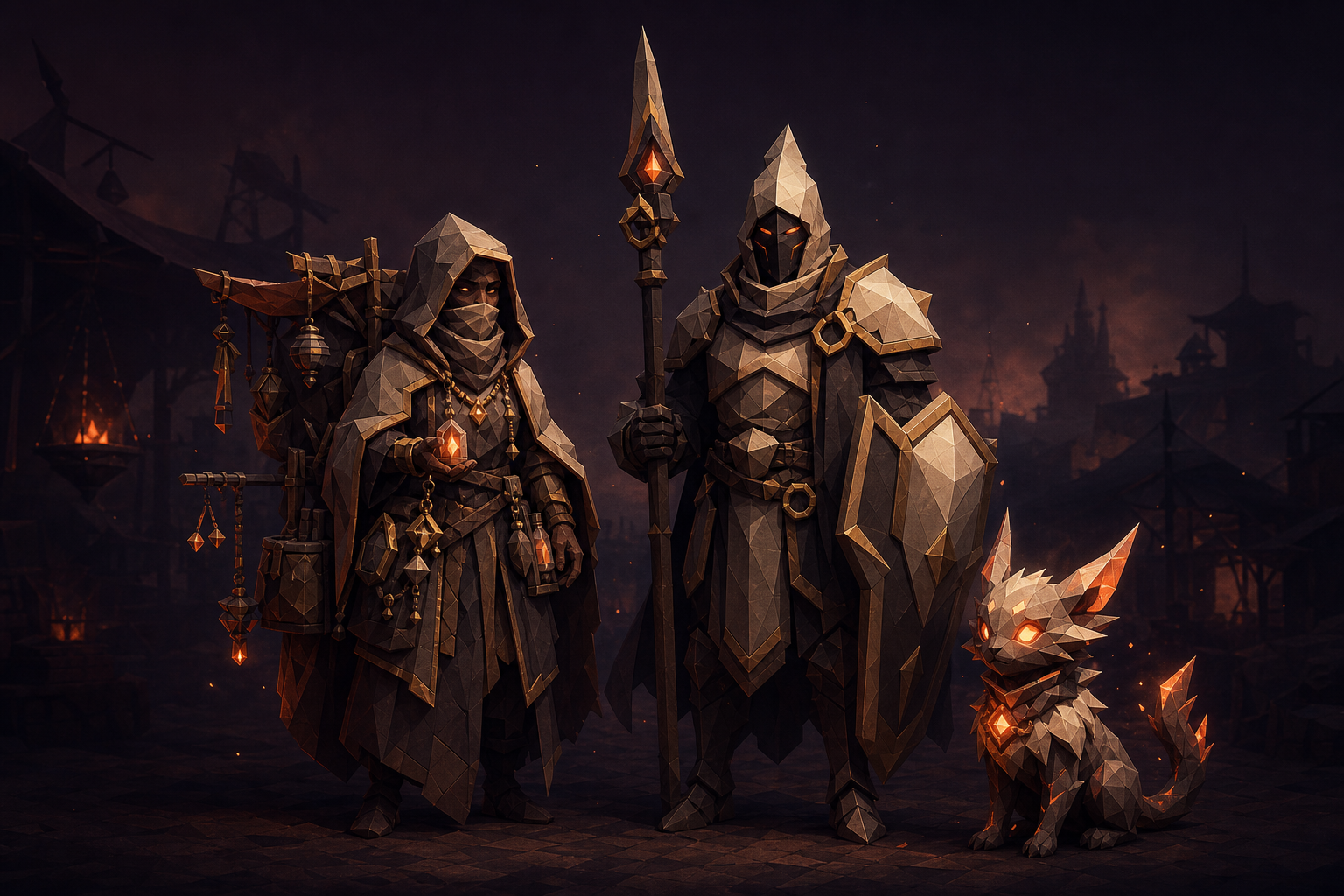
Knows the market, the factions, the going rate. Will haggle.
Suspicious of strangers. Decides who gets through.
Remembers your last run. Reacts to where you've been.
Three steps, no infrastructure.
Create a character
Personality, appearance, lore & knowledge books, permitted actions.
Drop in the SDK
Open-source Unity or Roblox package. One call. Key stays server-side.
Ship it
Limits, moderation, sessions and analytics already on.
FAQ
How do you stop a player from running up my bill?
Where does my model key live?
Is content moderation always on?
Which engines do you support?
The HTTP API is engine-agnostic, so you can easily build a client for anything else (Godot, Unreal, FiveM). Submit your open-source SDKs to hellojournale.ai for review to make them official!
How is this different from just calling OpenAI?
What does it cost? Is there a free tier?
Are the SDKs open source?
Make characters your competitive edge.
Start a free project and integrate a character that sets your game apart from the competition.
local Journale = require(JournaleSDK)
Journale.ChatWithCharacter(player,
"silas_merchant", "Any work?")
-- reply ~600ms · moderated · 1 cr